Bangor University School of Natural Sciences welcomed Sarah Elton from Durham University who was presenting her research focusing on red colobuses, Old World monkeys of the genus Piliocolobus. The talk included models Elton and her research colleagues had proposed, indicating the distribution of wild red colobus monkeys in Africa: found in Central, West and East Africa, but not in the Southern region due to lack of daylight as the monkeys cannot function in such few hours. This is because, while they have strong stomachs to digest plant matter, they need plenty of rest to do so and, on top of socialising etc, South Africa simply wouldn’t provide enough daylight.
Stressing the importance of preserving biodiversity in Africa, Elton highlighted the fact that these colobus monkeys are ‘heavily hunted by chimpanzees’. This point was a key part of the talk for me because, having studied genetic engineering in some modules of my degree, I am aware of the value that genetic diversity can have when it comes to battling disease.
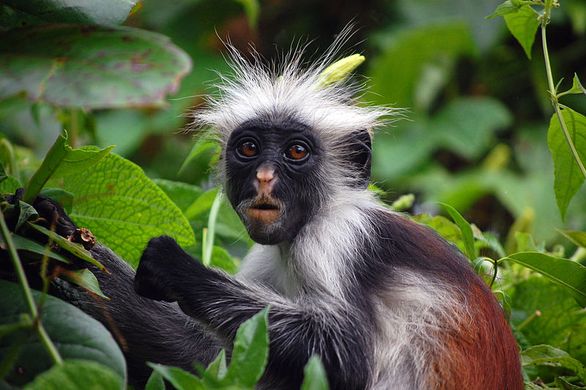
A key on-going debate raised by Elton and popular among others in her field of work is the cause of increased colobus cranium size for which there are 2 answers being argued:
- Environmental productivity
- Environmental predictability
The seemingly unresolved argument is in apparent need for compromise as increased cranium size is ‘probably a bit of both’ Elton went onto admit. This came across nicely as it showed a group of passionate scientists fighting to get their point across, yet they recognise the bigger objective and are willing to consider each other’s point of view. This is vital if any innovative idea is to be decided on/developed in the future.
Elton went on to say that increased body size may be directly proportional to how advanced sexual dimorphism is in colobus monkeys. This was an interesting concept and not something I would really associate with body size. I assumed it was to do with nutrients being available/unavailable at critical growth stages therefore dictating the degree to which the organism develops into an adult. Being a biological science student who is not specialising in animal behaviour, it was interesting to be presented with a different flavour of research to that of the more molecular level.

 Joe's blog