Professor James McDonald of Bangor University presented his research progress on the causes of Acute Oak Decline (AOD) in Britain, beginning by raising the global concerns about tree health and deforestation.

With several square miles lost per week worldwide, the demolition of trees is a growing problem.
Photo source: https://inhabitat.com/amazon-deforestation-leaps-16-percent-in-2015/
McDonald stressed the significance of losing keystone species, such as oak trees. These species support biodiversity and some have provided raw construction materials for thousands of years.
AOD – The Hidden Evil
For oak trees however, it seems there is another hidden evil lurking in the forest. A decline in oak has been observed since the 1980’s, with trees typically dying within 3-5 years of developing AOD symptoms. These symptoms include:
- Vertically arranged lesions, possibly linked to pathogenic microorganisms travelling up the vascular tissue
- Cracked outer bark
- Dead inner bark
- Larval galleries from Agrilus beetles
AOD is ‘bleeding’ these oak trees to death.
Daily Mail

Photo source: https://www.telegraph.co.uk/news/earth/environment/12190768/Scientists-given-1m-grant-to-research-killer-oak-tree-disease.html
“It is important to be a multidisciplinary scientist because you must be able to engage in other areas of research”
Dr James McDonald
While it’s tempting to focus purely on your areas of interest, science is one whole subject, with different research areas interlinking.
McDonald listed the abiotic factors of AOD occurrences including:
- Lower elevation sites (common in South and South-East England)
- High temperature
- Drier sites
His point is evident here as an understanding of Geography is required to consider the above factors.
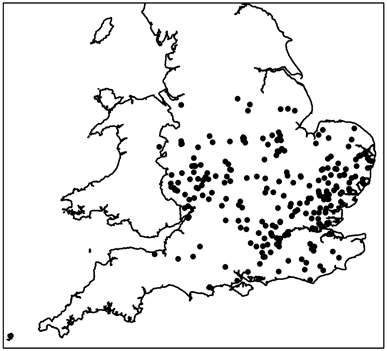
Brady, C., Arnold, D., McDonald, J. and Denman, S., 2017. Taxonomy and identification of bacteria associated with acute oak decline. World Journal of Microbiology and Biotechnology, 33(7), p.143.
What Causes AOD?
Sandra Denman, who McDonald has worked with previously in forest research, reported ’13 new bacterial species’ from 2 genera found in AOD trees. 2 bacteria ‘significantly associated’ with AOD are:
- Gibbsiella quercinecans
- Brenneria goodwinii
This led to formulation of the hypothesis:
‘Gibbsiella quercinecans and Brenneria goodwinii are necrotic pathogens of oak’
McDonald voiced his concern over the Great Plate Count Anomaly – that traditional cultivation only enables scientists to grow a desperately shallow maximum yield – 10% of environmental bacteria under laboratory conditions. This seminar appealed to me given my fascination with microbiology.
It also fits nicely with my dissertation – ‘Evaluating the Effectiveness of Isolating Cellulose-degrading Bacteria from Lignocellulose Samples using Revolutionary iChip Technology’, in which we have been able to cultivate a higher percentage of bacteria than we were with traditional cultivation.
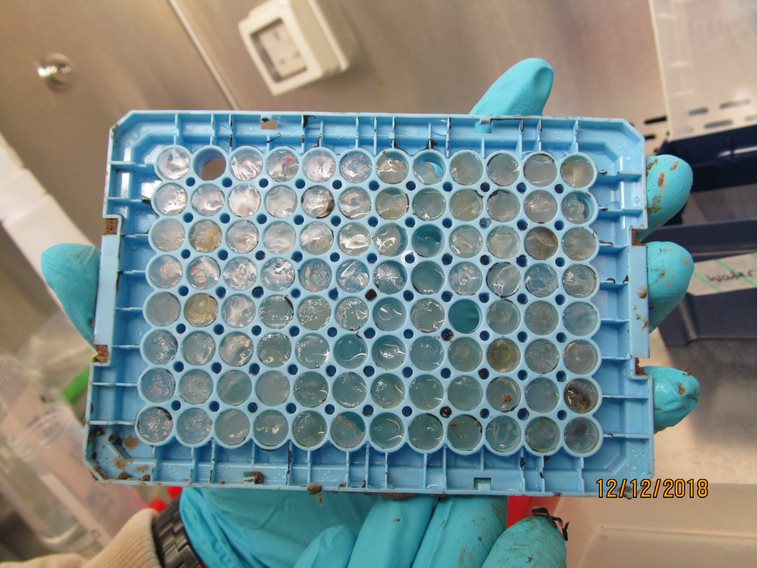
Bacteria never fail to impress those with so many more cells than themselves, and it looks as though they’ve struck again here. While McDonald’s evidence appears to prove the hypothesis, the study remains inconclusive due to cultivation complications.

 Joe's blog