Many a reader may be puzzled when they learn that Professor William Mitsch, an expert in ecosystem ecology and ecological engineering would travel all the way from the USA to Bangor to give a talk on wetlands. But the 2004 co-laureate for the Stockholm Water Prize did not waste time in stressing the importance of wetlands, found more commonly in the tropics than on the equator, once the initial applause had been modestly appreciated.
‘Temperature is everything to biology, increasing it will change a lot of things’
– Mitsch
He entitled his talk ‘The Role of Wetland Processes in Global Climate Change’, pointing out the enormous impact temperature change is going to have on the planet and suggesting that sea levels are set to increase by at least 3cm per decade.

Photo source: https://helpsavenature.com/global-warming-effects-on-earth
Alarmingly, Mitsch stated that, regardless of the effort and hopeful progress made in quelling an ever-growing global carbon footprint, temperatures will continue to rise given the high level of carbon dioxide in the current atmosphere.
‘7-9% of the world’s lands are wetlands, but they play an enormous part in the carbon cycle’
– Mitsch
He has worked alongside other scientists for years to try and find the most appropriate ‘systems’ for long-term carbon sequestration. I personally feel this area of research has gone under the radar and was surprised to learn its significance to the world.
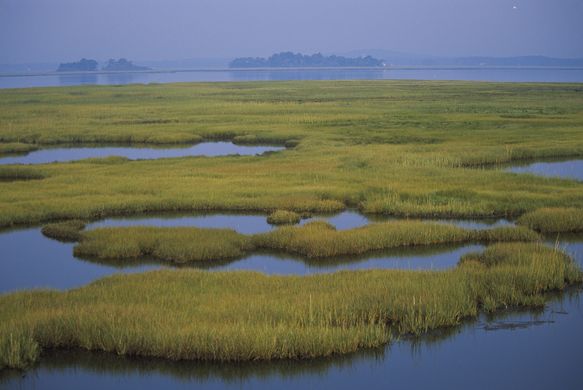
Photo source: https://www.lakescientist.com/research-summary-effect-deforestation-global-wetland-hydrology/
‘A wetland is a reservoir of stored carbon we don’t want to be released into the atmosphere’
– Mitsch
Mitsch stated that many climate change scientists tend to view wetlands merely as greenhouse gas sources. The connotations associated with the phrase ‘greenhouse gas’ may be giving wetlands bad press before scientists have given their potential use serious thought.
Losing wetlands = losing carbon storage
Interestingly, when potential climate change breakthroughs are publicised they always seem to involve a rather complicated new method or process. It seems somewhat bizarre to spend so much time and money developing what may be described as new coping mechanisms for a race that doesn’t seem to collectively acknowledge one of the planet’s most efficient carbon storage systems.
It seems fitting that World Wetland Day (2nd February) was closely followed by this seminar by a matter of days. While they will never beat the sunny beaches of Barcelona in many people’s eyes, it’s commonly said that variety is the spice of life and, as far as climate change is concerned, these muddy, grassy land masses certainly don’t dampen the mood.

 Joe's blog